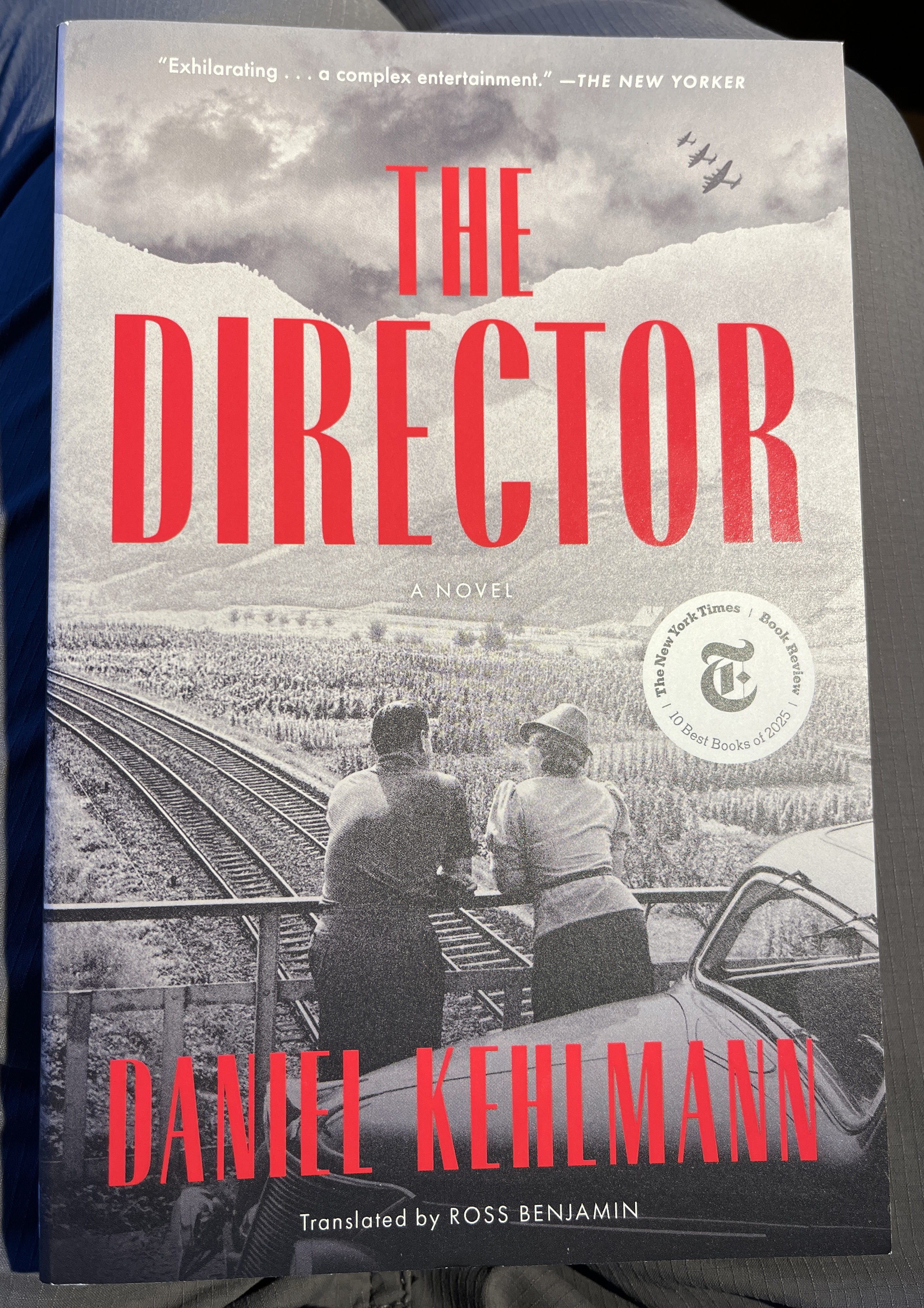
 I was a bit hesitant to start this one after my disappointment with The Witch, another 2026 Booker nominee, and after it didn’t win said prize. But I was intrigued by the subject, and I’m now very glad I didn’t avoid it. It was excellent.
The said director is GW Pabst, Austrian expressionist filmmaker from the early- to mid-20th century. After emigrating from a troubled Europe to the blinding glare of Hollywood, Pabst and family return to Austria for what is supposed to be a brief visit with his mother, hoping to get her settled in a nursing home before leaving permanently. Unfortunately, this is in late August 1939, and before they can leave, Germany invades Poland, the borders are closed, and they are stuck in the new world order of the Third Reich. Pabst is somewhat famous there, and so has the opportunity to continue making films, but now under the auspices of the Nazis. As an artist and someone formerly suspected of being a communist, he is conflicted but cornered. He begins to work on films, and initially enjoys the lavish budgets and quasi-freedom he has to make the movies he wants, albeit with some constraints – only actors already within the regime, a certain amount of censorship, the constant oversight of political officers. The toll on his family is devastating, but he ignores that, saying they just have to tolerate it until the war is over then all will go back to normal. As the war years drag on, he is drawn more and more into required political and humanitarian compromises in order to realize his vision. His final film under the regime is completed within days of the end of the Reich; he believes it is a masterpiece, but through a set of ordinary mix-ups, the film is lost. In the end, the masterpiece never sees the light of a cinema.
Told from various perspectives, the story has a somewhat dream-like quality, with some sections having an almost stream-of-consciousness feel reflecting the confusion and distress of the narrator. We follow Pabst’s son – abused and neglected at home, alienated at school – as he leans into the Hitler Youth as a place he finally belongs, is seen, and has value. We also get Pabst’s own perspective on working with Leni Riefenstahl, his wife’s view of the maddening requirements to be a loyal wife and good citizen amongst the true believers, and various other views from crew members and others (including PG Wodehouse as prisoner-of-war cum Nazi propagandist). While most of the characters are real people, and the events are similarly real, Kehlmann has taken some license with situations, timing, and characters, and his version of the loss of the masterpiece film is wholly invented and very creative.
The climax is not the loss of the masterpiece film, but somewhat before, during the making of the film. I won’t spoil it, but I can say it was a gasp-out-loud page-turning horrific revelation that had me riveted and incredibly moved. While the erosion of Pabst’s integrity is mostly slow in the novel, the turning point is devastating and surprising, as are the novel’s final set of reveals. The novel is worth reading overall, as it is very good and an excellent portrayal of that time and place and the constraints and compromises required in the Nazi regime, but it is a masterpiece in its own right for those major plot points. Those revelations reminded me of the story Address Unknown and its shocking plot point, albeit there it is more of a story zenith than a character nadir. I was also reminded of the concept of doublethink from Nineteen Eighty Four, as people needed forget or ignore their own behaviours, and then forget that they’d forgotten them, in order to retain some semblance of sanity. Kehlmann evokes considerable compassion for those who cannot achieve this mental feat.
The degeneration of one’s beliefs and the impact on the soul is presented as a universal truth and as a division within humanity. People with generally good hearts can be coerced, lulled, or wooed into doing horrific things or witnessing them without objection; the pace may be gradual or sudden, but the impact is scarring and unrecoverable. However, such people are redeemable or at least understandable, even as they bear their damage and scars for the rest of their lives. This is contrasted with those for whom the horrific things give them purpose, and almost become part of them physically. The descriptions of Leni Riefenstahl as almost a gothic witch, as if she has internalized and is taking succour from her hateful views and actions, embodies the corrosiveness of evil but also shows how there are people for whom the evil deeds are done without compromise but rather reflect their already dark souls.
This novel is about more than films and filmmakers. It’s about moral choices and compromises one hopes to never encounter, but which were real and regular occurrences for people in those places and time. Like most good historical novels, it tells us much about the past and also a bit about our present.
Fate: I’m not likely to read this again, so off to the little book library.
13 – somewhere I’ve never been
19 – based on a true story
21 – translation
25 – new author to me
32 – about art (filmmaking)


Leave a Reply