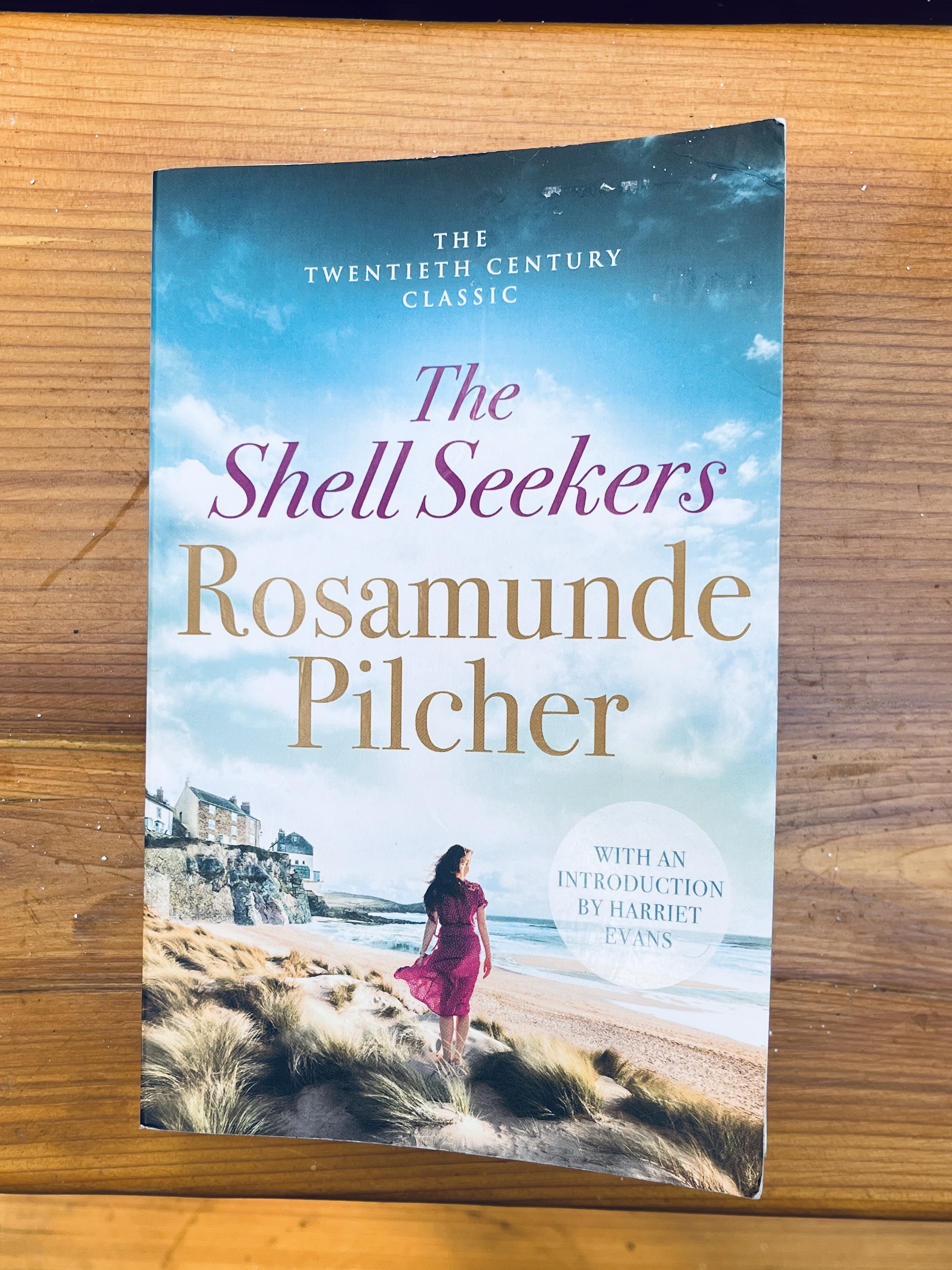
 The Shell Seekers is considered a classic (e.g., on this BBC list) and has not been out of print in the nearly 40 years of its existence. This family saga centres on Penelope Keeling, 64yo (same age as the author) and living in a tidy little house on an acreage in Gloucestershire, and her three children. Through several flashbacks inspired by current happenings, we learn of Penelope’s life – her bohemian but still well-off upbringing by her elderly father and very young French mother, their life in London and in Cornwall, their experiences during the war and afterwards up to the present (1988). Her children are not especially admirable – Nancy is a needy social-climber; Noel is scheming and superficial; Olivia is cold and career-focused (an early Anna Wintour) – and while Penelope loves them in her own way, none of their relationships could be described as warm or close. While they were growing up, Penelope’s priorities included seeing that they had the security of food and shelter and learning the confidence to be independent people. Sadly, being kind and respectful to others and reflective of their own behaviour were not among those priorities – none of the children are especially likeable. Despite her ill-matched early marriage at the start of the war, Penelope has a love affair in 1943 (ending when the dashing swain is killed at D-Day) which colours the rest of her life. The titular “The Shell Seekers” is the name of a painting by Penelope’s father, one he had at the family home while Penelope was growing up, gave to her as a wedding present, and has remained with her her whole life. It is the fate of the painting and others in Penelope’s possession, and their emerging public interest and increasing value, that drive the story – Nancy and Noel being interested in realizing their inheritance early, presented as concern for their elderly and vulnerable mother, cause discord and disruption, leading Penelope to reminisce and then make some changes. In the end, Penelope dies, and all accounts are settled,
I wanted to enjoy this book, and I did somewhat, but ultimately, I found it was both predictable and unbelievable. Of course, the dashing young lover, training troops for cliff climbing on D-Day, would volunteer to take part in the action and get killed. Of course, the husband she married in haste would turn out to be a dud. Of course, the father was saintly and the mother ethereal in her goodness. Even each of the children were caricatures – predictable in their grasping selfishness and indifference; only Olivia has any mildly redeeming qualities but still prioritizes herself, something her mother admires (isn’t that what she wanted her children to do?) but also resents. The most unbelievable bit is Penelope herself. Being raised in a carefree and unconventional mode, she nonetheless follows the social norms of the time by a) marrying when she’s pregnant (despite her parents’ strong support for her to remain single because she doesn’t love the father) and then b) remaining married to him for another nearly 20 years and having two more children, despite his philandering and ongoing recklessness with money. She is presented as a dichotomy – a strong and independent woman who does not suffer fools, has a firm hand on her life and those around her, and is robust, generous with others, confident, and independent, AND as a frail (at 64!) elderly woman who put her own needs aside for the sake of her family and ended up alone and dissatisfied with her children. It is no wonder her final disposition of the paintings comes as a surprise to them, after a lifetime of complacency. While there are glimpses of her strength of character throughout, she actually is nothing extraordinary – a not-yet-elderly woman with ungrateful children who spends a lot of time ruminating on what-if. Her portrayal as frail at just 64 was perhaps the most unbelievable (but perhaps only because she is close to my own age).
Penelope puts a lot of emphasis on being self-reliant, something she expected her children to learn from her. But her own situation was more than somewhat privileged, involving little in the way of special hardship, and it seems she expected her children to both have a protected and supported childhood but also learn to be independent, confident, and considerate (especially to her).
The story was compelling if predictable, sad where it needed to be, and all storylines are tied off nicely at the end. I enjoyed it but didn’t love it.
Fate: the nearest little book library.
8 – female author
9 – made into a film/tv
12 – book I should read
25 – new author to me


Leave a comment