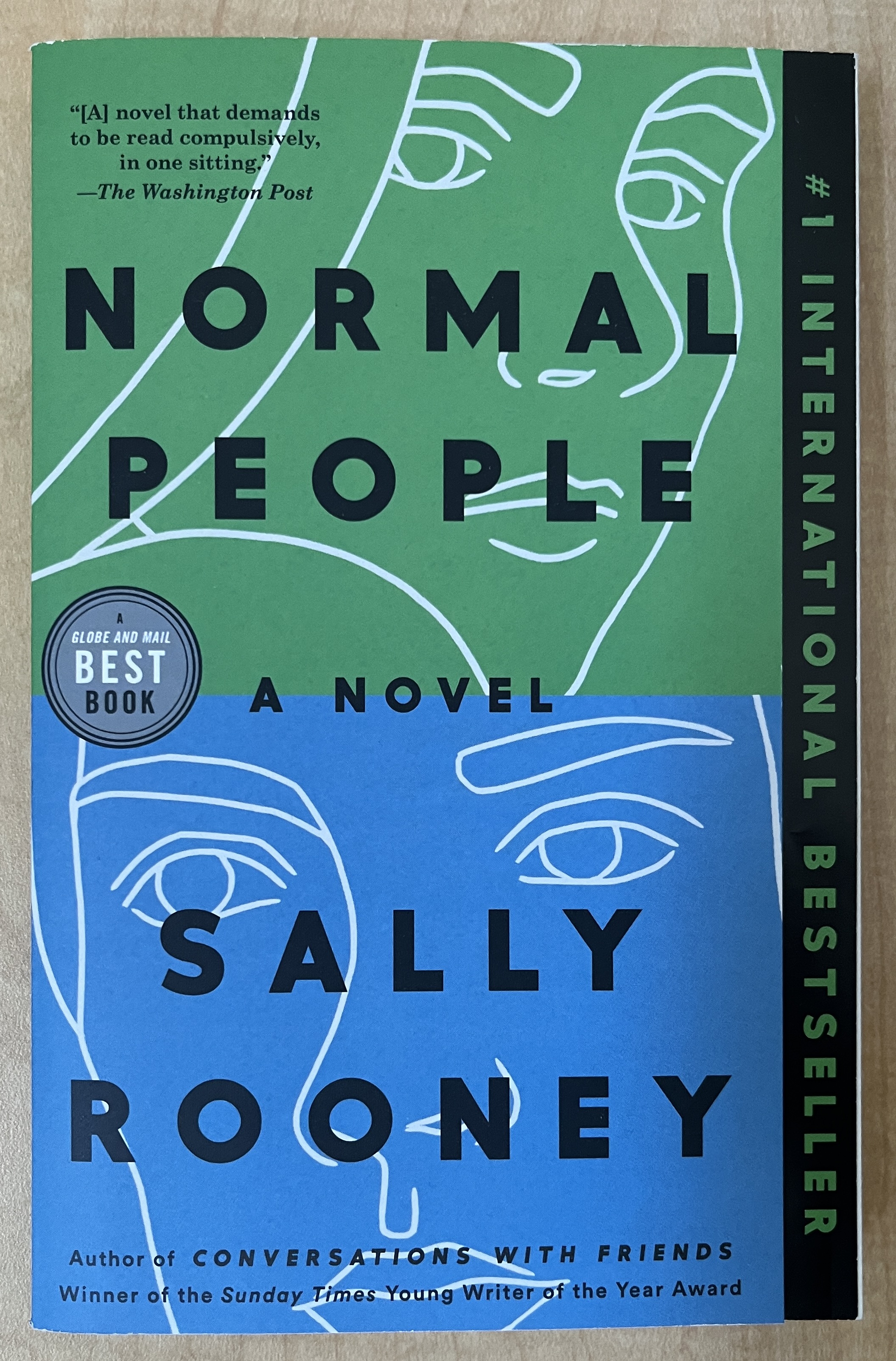
 I chose this book after hearing some podcasters go on and on about it, mostly in anticipation of her next/latest book (Intermezzo). Normal People is the one that established Rooney as an “it” writer, so it seemed the best place to start.
(SPOILERS ALERT) The story was interesting but not especially novel. Connell and Marianne are schoolmates who become lovers, and then drift into and out of each other’s lives with intensity – when they are in, they are all in; when they part, they are virtual strangers. Taking place during their late teens and early twenties, the story reflects with often excruciating precision the ardour and angst, the torment and passion, of love and life at that age. Despite the tempestuousness, the love and confusion between them is completely believable and relatable – that person we love who also loves us but with them a life is impossible (yet we keep trying). Each has their own tortured past they are trying to either ignore or overcome, but as young adults they are ill-suited to resolve their issues, especially with each other. In the end, the reader sees along with them that their connection will never be broken, but also that they’ll never be together.
The writing reminds me of that other modern favourite Irish writer, Clare Keegan, in its mastery of show-don’t-tell and delicious description (“His effortless tyranny over someone who seems, to other people, so invulnerable.”) and was evocative of that period of early adulthood where every experience and feeling is fraught with interpretation and extremes of joy or sorrow, elation or depression. So much leaping to conclusions while learning to navigate the world and adult relationships. While I didn’t love either Connell or Marianne, I found each of them and their circle of friends recognizable and relatable. 40 years after my own young adulthood, it seems that not much has changed.
Both Connell and Marianne are fatherless, which plays a role in their dysfunction as adults, but neither father’s absence nor the direct impact of that is explained or explored, which felt like a missed opportunity. Marianne’s family is definitely the worst, but even some of the abuse and damage there is hinted at more than revealed, leaving some uncertainty as to how much was real and how much was the product of the active imagination of an angsty teen.
When I finished it, I didn’t think much of it. But since finishing it, I’ve thought about it a lot. Clearly, the story and characters stuck. So more Rooney in my future.
Fate: little book library (maybe, it might stick a bit longer).
8 – female author
9 – made into a film/tv series
13 – somewhere I’ve never been
25 – new author to me


Leave a Reply