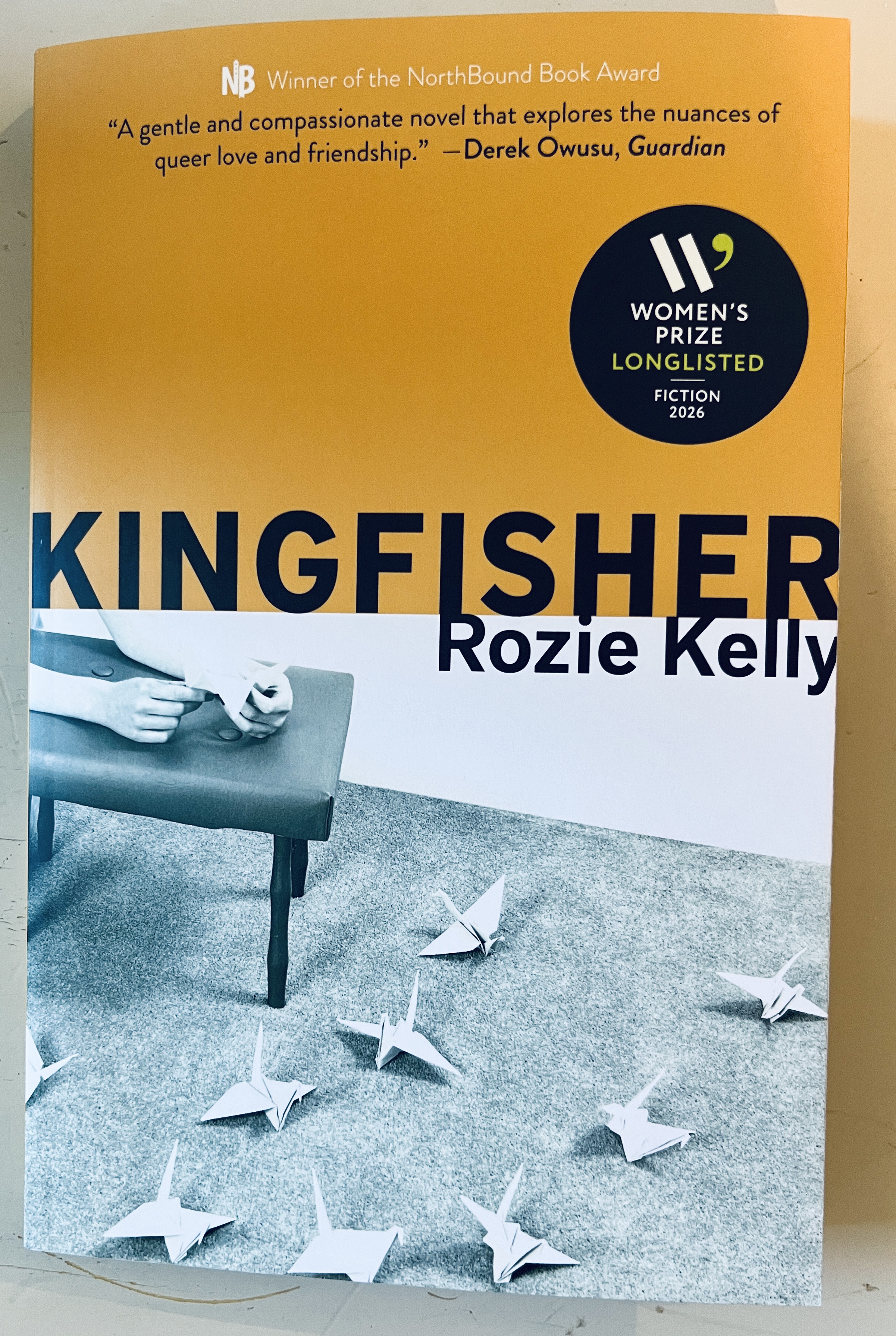
 When collecting some books from the bookstore recently, I saw a display with all the books on the Women’s Prize shortlist, which included this little book. On a whim I added it to my pile, not knowing anything about it. At home, reading the back cover, I had a twinge of regret – this is not a book I would have selected for myself – but curiosity got the better of me, and I wanted something a bit deeper after a few lighter reads. This book was unexpected and gripping and very good.
The unnamed narrator is a very confused man. A writer and poet, he finds himself in a loving but complicated relationship with Micheal and working part-time at a university as a tutor. It is there that he meets the poet, a woman a bit older than himself, with whom he becomes infatuated, gently pursues, and falls quickly into unrequited love. He is dealing with (and not very well) his aging, difficult, homophobic mother, who was abusive and terrible to him his whole life, as well as a longing for his long-dead father. As he moves in all of this (he does not navigate it, more he just sits there and all of this is happening to him), the poet is diagnosed with a return of breast cancer and he becomes one of her carers. His relationship with Michael is pulled apart, his mother dies, and as he is watching the poet also leave him in death, he decides to write the story of his life with the poet at the centre of it. His novel, called Kingfisher, is this novel.
This novel is beautiful and devastating. The narrator is a confused, submissive, and damaged man who makes terrible choices and loves strongly. The poet is independent and selfish but also pitiable; as a strong and famous writer, she lives in a spare, emotionless almost sterile way, passively taking much and giving little to those in her life. I expected to feel sorry for her in her illness, but I felt more sorry for the man and his being abandoned so much and so often. Most of those he loves are unworthy of his love, and those who love him are similarly left adrift – he is incapable of loving someone who also loves him.
Kelly deals well with the unconventional lives and loves in the story by not presenting any of them as unconventional – there is no question of why or why not in any of the characters or relationships, they just are because that’s how people love. My initial hesitation with the book was my past experience with queer literature – it seems to always want to teach me how different and difficult it is to be queer by showing me the relationship and social challenges and the unusual sex life, deliberately to making me uncomfortable with the unfamiliar and guilty for not accepting or celebrating a life I don’t understand. Kelly does none of that. She instead presents the narrator and all his difficulties and messiness and pain as a human living their life, with no emphasis on any of it being unusual or requiring explanation or editorial comment. This was the most powerful part for me – reading about a life unfamiliar to me without the author trying to teach me a lesson because I’m not queer. In this way, I was much more open to and understanding of that different life because I was allowed to see and learn about it, not be lectured about it.
Kelly also writes masterfully in the male voice. With so many experiences of this being done poorly (in both directions), I was surprised and delighted by this. It sounds simple but it’s really not – too often, authors are cringingly inept at creating and expressing characters of the opposite sex. It’s even more impressive that Kelly writes convincingly in the first person and not once lets the curtain fall. The story is also told mostly in the present tense (something that can also be tedious if done badly), another genius feat.
This is a beautiful, compelling, and exquisitely written story. I did not expect to like it, but I loved it (a bit like the narrator, loving things that are unusual for me).
I had just two issues with the book, neither negative enough to make me love it less. First, I didn’t love the meta-ness of the reveal that the book I was reading was the book he was writing. I felt that cheapened it in a way, but I did see by the end how that element worked, and Kelly doesn’t get in the narrator’s way or belabour the point. Second, the book blurb on the back does not do the book justice and, on rereading it, sounds like a very different book. The author would do well to get that re-done for future editions.
Fate: not sure. I don’t know that I would read it again, but I enjoyed it enough that I might. Perhaps it stays on the shelf for a while.
4 – published in 2025
7- debut
8 – female author
20 – one word title
25 – new author to me
37 – non-mainstream

