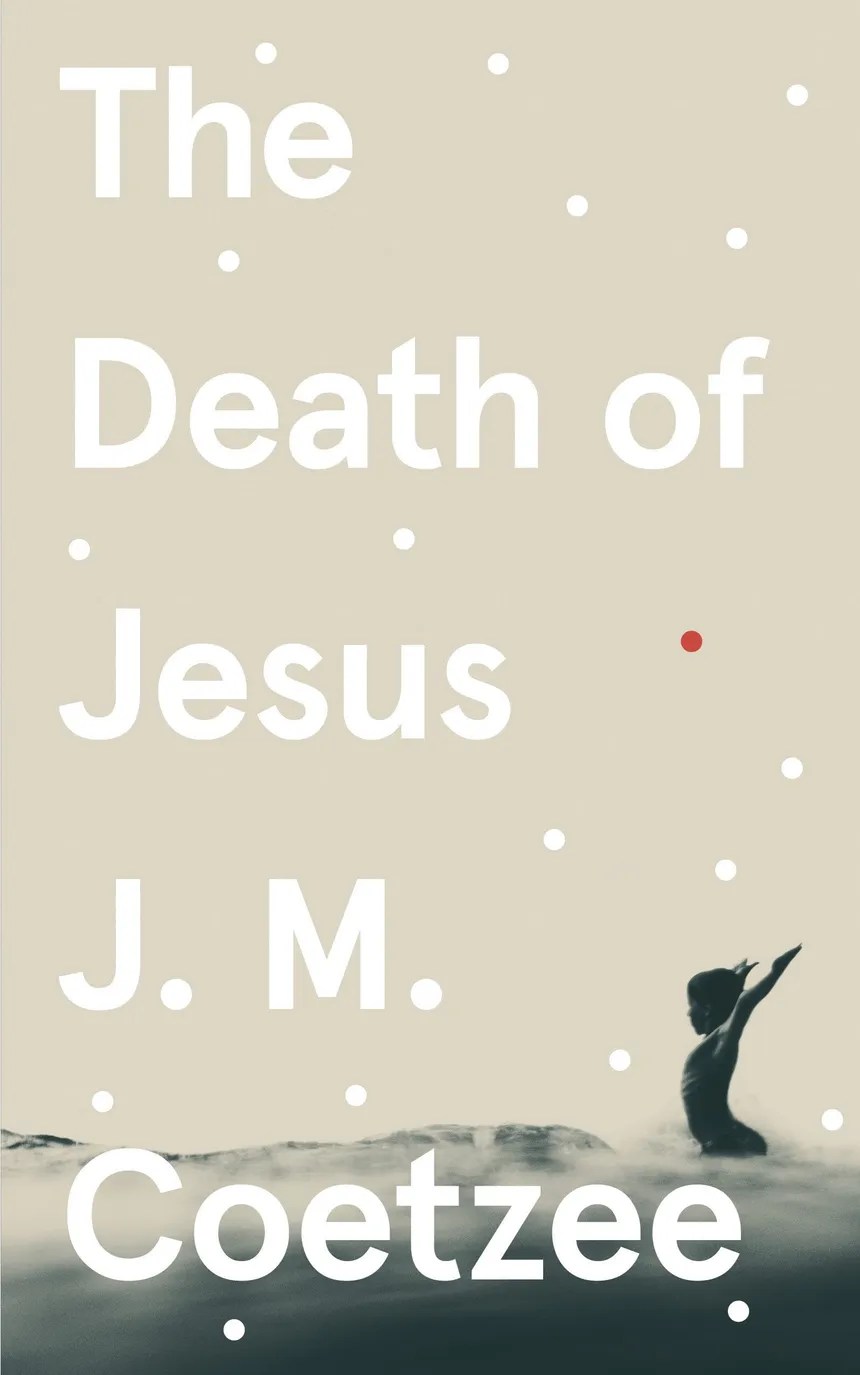
 Book three of this trilogy, and I’m left no further ahead in truly understanding all of the connections between the story and Jesus. After finishing this one, I did extensive reading of other reviews and assessments of the books and found many were just as confused as me (although some readers were able to go very deeply into the alignment with more ancient texts than I’m familiar with).
With spoilers: The story returns to the family in Estrella, a few years after the events of the previous book. David is now 10 years old, continuing his dance and music lessons at the Academy, playing soccer with the neighbourhood children, and being ineffectively home-schooled. A slightly malevolent character, the head of a local orphanage and day school, observes David at play and decides to “recruit” him for the school’s soccer team by convincing him he is an orphan. While technically true, David’s obstinance and defiance of Inés and Simón, his enduring but unofficial guardians, is a devastating blow to their family. As in the previous books, David is treated with awe and deference by everyone, and deeply loved by his guardians, so his casual cruelty is sharp and shocking. David falls ill at the orphanage, and in hospital becomes even sicker with a mysterious condition. While his fame as a storyteller and mystic has grown, bringing crowds of orphans, dance students, and hospital staff to gather at his bed to hear him speak, he ultimately dies almost alone. Following his death, there are a few strange tributes to him, and news of people in the town acting out allegedly in his name. Simón and Inés reconcile briefly and then separate for good.
I wasn’t prepared for David’s death occurring in the middle of the story; I expected him to recover from the wasting illness he was experiencing, and to eventually die closer to the end of the book in a more dramatic and public way. There was an element of his death that felt ordinary – how could this extraordinary character succumb to something like a disease? As I read it, there is actually a suggestion of murder. At the hospital, the demented Dmitri has been “cured” and, while still confined to the hospital grounds, is working as an orderly and so is omnipresent during David’s stay, growing more maniacally worshipful of him each day. Inés and Simón try unsuccessfully to bar Dmitri from David’s room, but instead are themselves barred from the hospital. Later, after David’s death, Dmitri writes to Simón: “I was the one who, when the night nurse came with the pills meant to put him to sleep, made the pills disappear.” This interference with David’s care suggests to me that Dmitri hastened David’s death, whether at David’s request or (more likely) to enhance David’s martyrdom and Dmitri’s significance in the story. Also, Dmitri was crazy and already a murderer of someone he loved.
There are other similarities to the story of Jesus. When David becomes ill, and has his first inkling of his impending death, he sobs to Simón, “Why does it have to be me?” As in the previous books in the series, David seems to have a queer awareness of his fate that he finds both emboldening and terrifying. His belief in his specialness allows him to get away with much defiance of convention and social norm, and be on the receiving end of much awe and exaltation, but as a young boy the eventual cost of that specialness – his painful death – looms more and more frighteningly before him.
While dying, David insists he has a message to deliver to the world, but finds he cannot articulate it to anyone, and won’t try to tell Simón, claiming that he won’t understand it. After David’s death, Simón tries to find someone else who might have heard the message. Eventually, Dmitri claims to be the only one to have received it, but what he shares enigmatic and incomplete: “…David himself may have been the message. The messenger was the message…” At the Academy, his classmates and teachers put on a memorial event featuring The Acts and Sayings of David, a set of testaments about David’s life through stories, drama, music, and dance. The breadth of performances and the number of attendees at the event reflect the vast and mysterious impact of David on the world around him, not unlike the chapters and letters (including Acts) of the New Testament.
Later, when trying console Inés, Simón says,
“We have been lucky…we could have lived ordinary lives…instead we had the privilege of being visited by a comet…The world may be as it was before, but it is also different. We must hold tight to that difference, you and I, even if for the present we cannot see it.”
There are also deliberate parallels drawn with the story of Don Quixote. Simón is the logical and realistic Sancho to David’s flighty and errant knight. One of the few times we get a glimpse of David’s imagination is when he tells his own stories about the adventures of Quixote, which may be his own parables and sermons.
The ending of David’s life and of the book suggest there may be a future additional book wherein David returns. But more likely is the notion the life of David/Jesus has its greatest impact beyond his death in the stories told by and impressions he had on others and the disparate directions in which those take them. As with Jesus, David’s messages to the world are allegorical and vague, open to interpretation and application in both benign and violent ways. For sure, this story will stick with me for a while as I continue to wrestle with its mysteries.
This is a hard series to say I liked. I enjoyed the ideas and writing, but not many of the characters, and I often felt there were deeper layers the author was including but not intending to reveal, perhaps being deliberately obscure or obtuse for the sake of being clever. I will seek out other Coetzee novels in the future, with the hope that the stories are a bit more direct.
Fate: I was originally going to take the whole series to little book library, but now I may hold on to it for a while, as I’m still musing about the story as a whole.
14 – a name in the title
36 – part of a series


Leave a Reply