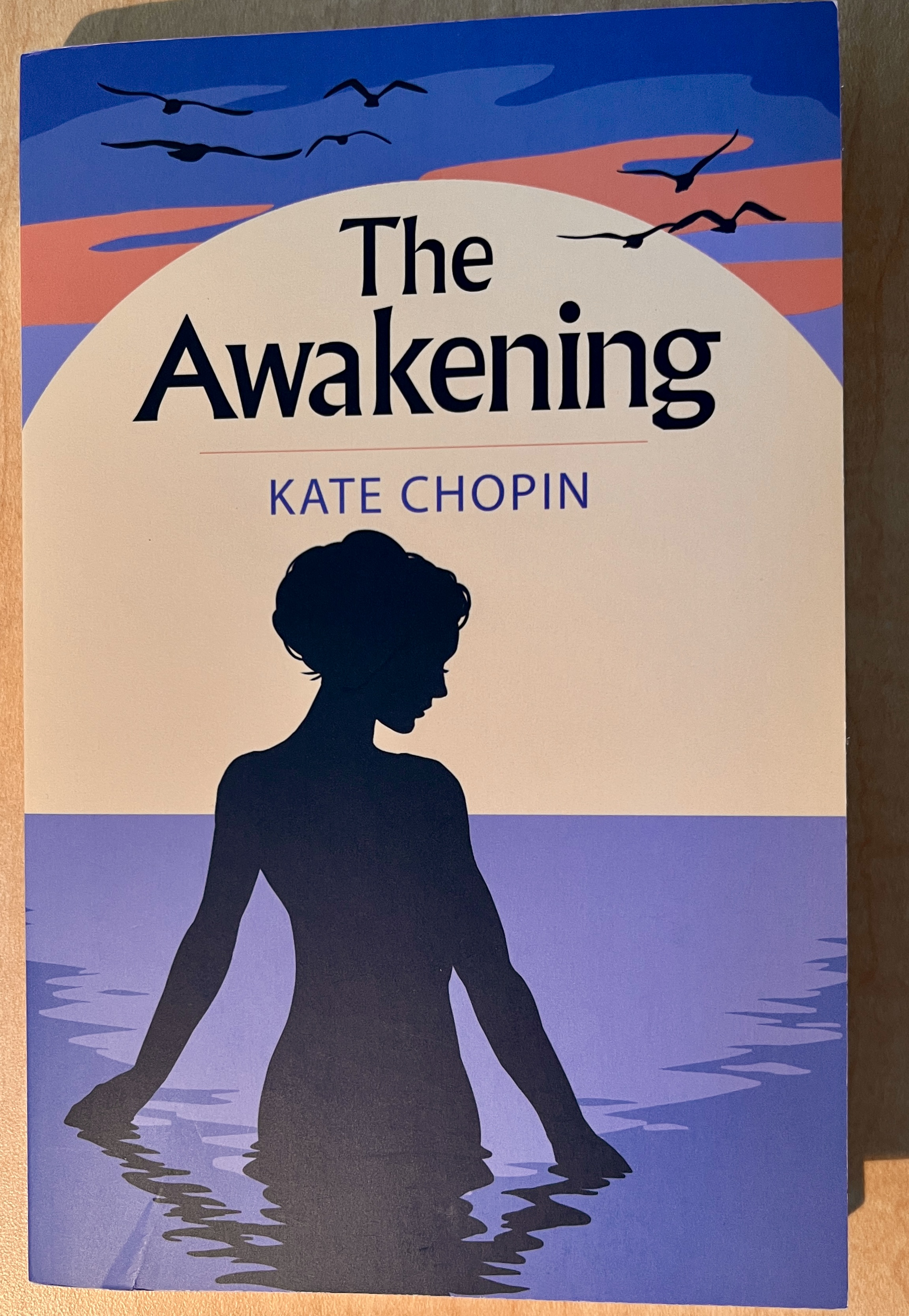
 I first heard of this book on the podcast Backlisted, and then again in a book about banned books. The podcast praise made me interested in reading it, but I was hesitant due to comparisons with Virginia Woolf. Then the book was displayed at a bookshop during a recent shopping trip, so I took it as a sign that it was time to check it out.
The story centres on Edna Pontellier, a mother and housewife in New Orleans who, after some unusual encounters during a summer vacation, awakens to her own identity and chafes at the constraints in her life – her marriage, the expectations of society and religion, and the experiences she longs for but are out of reach. Returning to the city, she finds herself alone at home for an extended period and uses the time to upend convention and unleash her own desires and needs. Unfortunately, her own newfound freedom doesn’t extend to others, and happiness is not guaranteed. With freedom comes responsibility, and acceptance that not all choices work out. Her almost childlike mood swings and indulgences reflect Edna’s naiveté and the novelty of her feelings, and her disappointments take her to depths of despair that a more mature woman would understand and endure. There are similarities to Madame Bovary, A Doll’s House and Anna Karenina but I found Edna to be a far more relatable and sympathetic character than any of those others.
There are clear feminist themes and commentary on the societal norms of the time. Edna tells a friend that she would give her life for her children but would not sacrifice herself. While her friend doesn’t understand, the reader sees Edna discovering what is essential about herself as an individual, and how that transcends her physical life and the demands of society.
I was relieved to find that the writing was not Woolf-like, but much more naturally narrative. Told in the present tense, the reader moves in almost real-time with Edna, observing and experiencing her highs and lows with immediacy and clarity. There are a few scenes where Edna is absent, but she is always the topic of discussion or thought of those involved. Along with her awakening, she also experiences questioning of her own role, conflicts with her various loves, exploration of her sensuality, and exhilaration in the freedom she assumes for herself. The writing is engaging, clear, and never strays into direct commentary by the author while still conveying her messages.
In what could easily be a catchphrase for the novel, one character says, while embracing Edna,
The bird that would soar above the level plane of tradition and prejudice must have strong wings. It is a sad spectacle to see the weaklings bruised, exhausted, fluttering back to earth.
This book is excellent, and one I will likely read again.
Fate: onto my bookshelf.
3 – published before 1939
8 – female author
9 – made into a film
13 – set somewhere I’ve never been
25 – a new author to me
35 – banned (or at least censored and challenged)
 rclr
rclr 
Leave a comment