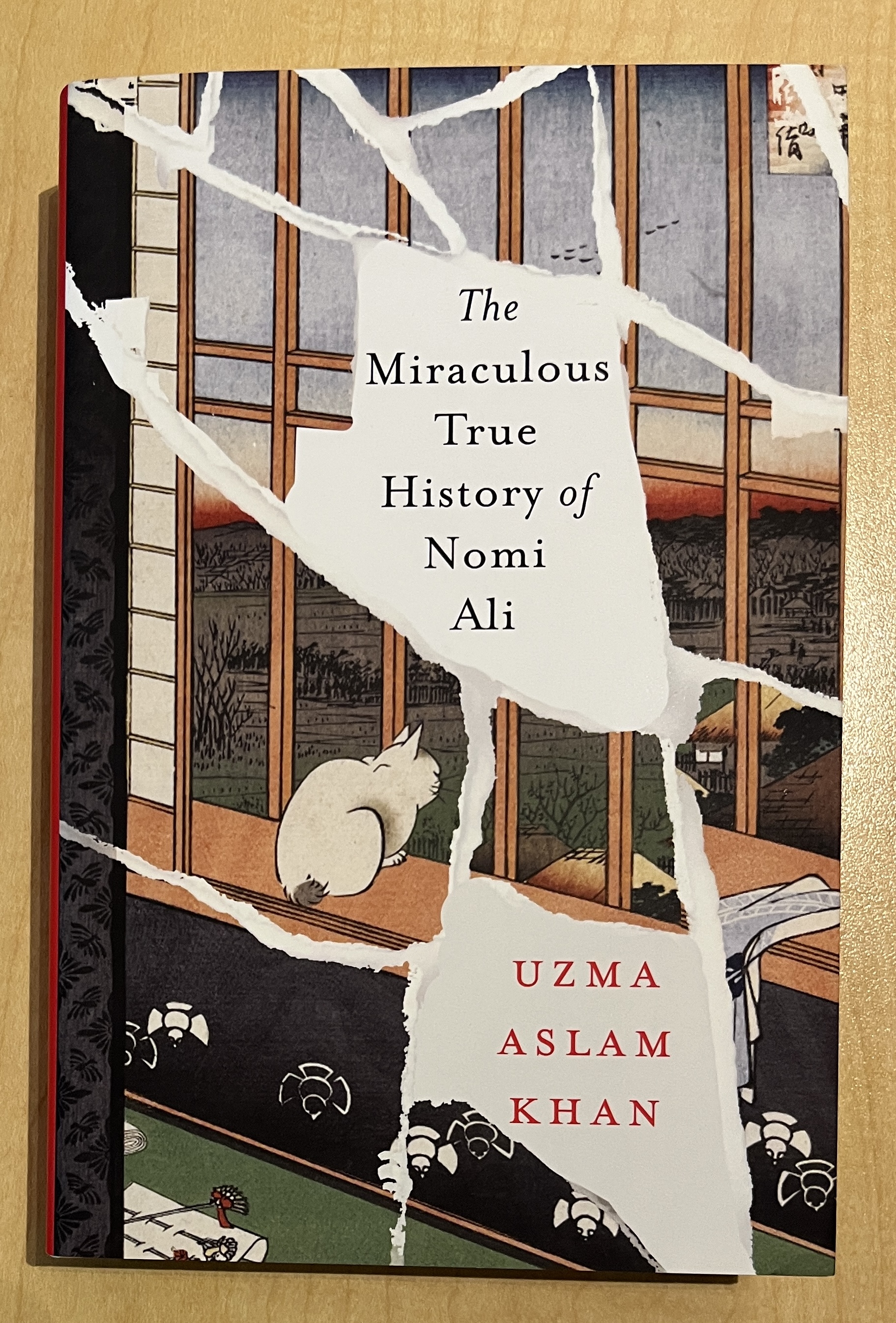
 I’ve read one previous book by Khan (Trespassing) and enjoyed it very much, so was looking forward to this and was not disappointed. Khan has a knack for creating small believable stories within larger historical settings, providing a glimpse into lesser-known situations through her characters.
In this novel, we are transported (like most of the characters) to the Andaman Islands in the mid-1930s. At this point, British colonial rule in India is at its most desperate. As the remotest part of India, the largest of the islands is home to a prison for the worst criminals, including political ones. Those transported to the island to serve their sentences are not returned to the mainland upon release but remain on the island to live out their days. For most, their families (wives and children) were transported at the same time to be there when they are released; also, because they are tainted by the stain of their husband’s crime, they are unwelcome in their communities, and so their own transportation is inevitable and essential. Within this context, we meet the Ali family – Haider, who was convicted of murder (an accidental poisoning) and sent to the Andaman prison, his wife Fehmida, who was pregnant at the time of their transportation, their son, Zee, and daughter Nomi. We also meet the characters around them, directly and loosely connected to the Ali family – other villagers, prisoners, and the British in charge of the colony and jail.
In the early parts of the story, the islands are part of colonial Britain, complete with the violence, racism, and corruption of the rest of the realm, made much worse by the isolation. The British control everything, including information, so the islanders are unaware of and unprepared for the start of WWII, which begins for them with the departure of the British and the invasion by the Japanese. Things go from bad to worse for the islanders, and there are no survivors really – those that live are scarred in all ways. In the end, Nomi and her mother, and just a few others from the village remain. They are given the opportunity to be relocated to Burma but choose to remain on the island. Despite all the horrors, they have been through enough trauma – be it every so damaged, there’s no place like home.
This novel reminded me of A Fine Balance, another relentless tragedy where the reader keeps going through the unimaginable horrors to which the characters are subjected, hoping things will get better and being disappointed and even more horrified. The actions of that time and place are unfathomable, and the decisions at each juncture are fraught and tragic. As with that book, the villains are clear and monstrous; a key difference is all the villains here are either British or Japanese. The islanders, while flawed in many ways, are universally good, plagued by the colonial powers and repeatedly faced with unbearable dilemmas – like Sophie’s Choice on repeat – and the worst criticisms are about their indifference and lack of ambition. But consider where they are – if they paid too much attention to how they were being treated or their lot in life, they’d never stop crying. They are not complacent or naive about their circumstances, just realistic and practical, seeking equanimity and a kind of peace amidst the turmoil and violence of their daily lives.
The book is also very well written. It could have been preachy or sappy, but it was neither. Despite the characterizations of victims and villains, the stories and characters are complex and nuanced. The approach is very close to the best show-don’t-tell, with little in the way of editorial or expository text. Khan lets the history emerge from the story, with everything seen from the characters’ perspectives. There is little about the war or the situation in India because the characters knew little about those things. In this way, she creates the sense of isolation – the reader doesn’t just read about but experiences it. This could have felt constrained and narrow, but instead it provides focus, and a true evocation of the environment of the story.
Fate: I’m not likely to read this again, so it will go to another reader.
1 – a murder
8 – female author
13 – somewhere I’ve never been
14 – a name in the title
19 – based on true
37 – non-mainstream
 rclr
rclr 
Leave a comment