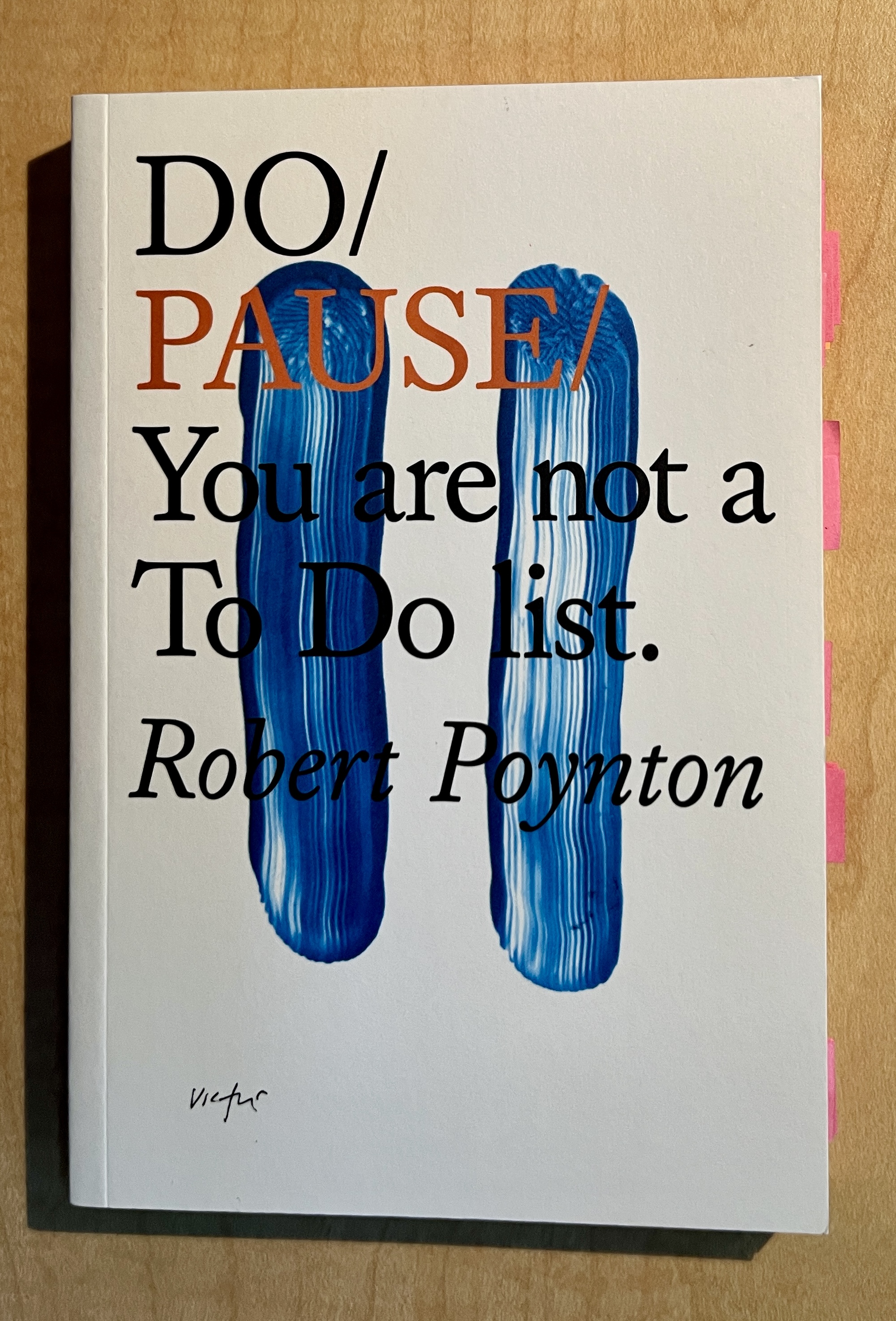
 I wish I could remember where I heard about this book. I suspect it was an impulse purchase on a bookshop online store, where the lovely cover illustration and tagline appealed to me: You are not a To Do list.
Part philosophy, part self-help, this manifesto advocates introducing conscious and deliberate pauses into one’s day as a way of clearing and calming the mind, and makes a compelling case for the necessity of doing just that.
The purpose of pause is to disrupt or change our work or thoughts to shift our thinking and ensure we’re getting and giving our best. It’s not about getting things done; it’s about recognizing that, unlike machines which are designed for constant work and maximum efficiency, humans need to shift gears regularly and take a breath (literally and metaphorically).
This approach is incorporated in the Pomodoro technique, recommended to be done old-school with a tomato-shaped kitchen timer but also available in various apps and desk toys. It’s a blend of focus and flow with pause – creating focus time with a known pause time. The recommended cadence is 25 minutes of focus and 5 minutes of pause. The focus is long enough to accomplish a task or two, but not so long that one’s mind wanders and wonders about unanswered emails (most, if not all, emails can wait 30 minutes). The pause frequency is sufficient to satisfy the urge to deal with distractions and then return to focus time feeling virtuous and satisfied with being on top of things. The emphasis is on effectiveness in task completion, with concomitant improvements in efficiency (working smarter rather than more).
Poynton suggests several levels of pause – those that can become habits, those we can design into our lives, and those we can recognize, appreciate, and absorb from cultures. He also outlines some tools to incorporate pause in structured ways, but these are only suggestions – the main point is to find a way to pause that works for you.
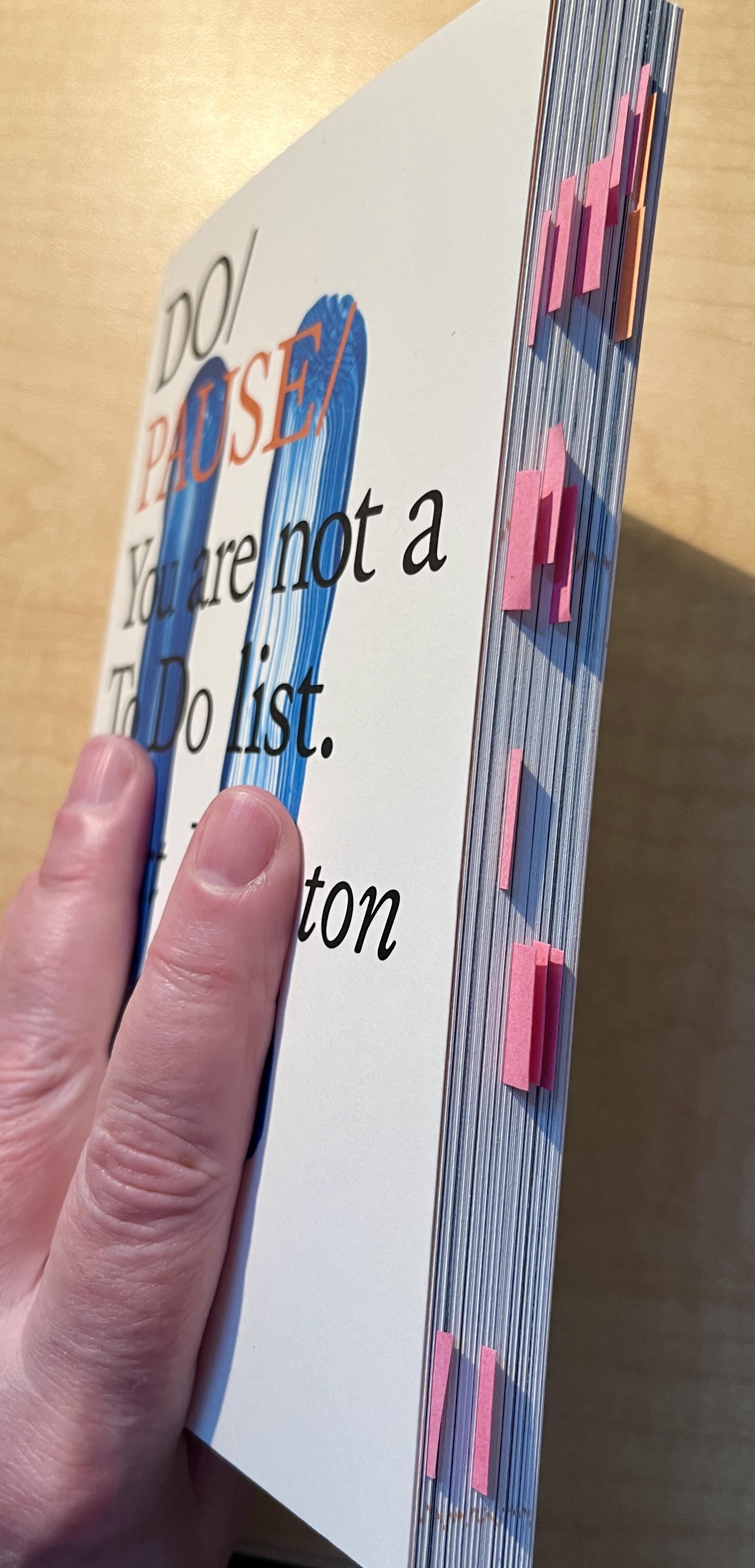
My favourite ideas (there were many):
- Pause in silence. In conversation, as in music or theatre, a pause can be very meaningful. Yet, often we’re uncomfortable with the silence, and we rush to fill in the space. Pausing for a few seconds requires bravery and patience, but it can be a gift to others who need it.
- Pause in action. Delaying the next step can sometimes provide more or better information, and make that next step more deliberate, decisive, and impactful. Is it necessary to respond to every email the moment it arrives, or act on every request immediately?
- “If in doubt, do nothing – far more of the time than we realize, there is no need to respond at all. ‘Pause and silence are the friends of better thought,’ he (Tom Chatfield) says.
- Count to one. Before opening a door or entering a meeting, consciously count to one. It is only a moment, but that deliberate interregnum creates a pause that resets you before starting something new. And everyone has time to count to one. “The important thing is to stop, not how long you stop for.”
- For longer more planned pauses (think a retreat or sabbatical), the key is also to be deliberate. While these can be relaxing, the purpose is to pause from your normal day-to-day and look at or do something else so that when you return to normal, you bring a fresh perspective. Isolated and distraction-free (i.e., no cellphone or wifi) are essential features of these, and so they are more challenging to schedule and do, but the benefits can be considerable.
- For a more cultural kind of pause, go somewhere completely different and behave like the locals. The change of pace and style of life is a pause to your day-to-day that can be more lasting than any other.
I like these ideas a lot, especially as relates to looking sideways at life to assess goals and priorities, explore alternatives, and truly rest and recuperate. A pause sounds more achievable and less drastic than a complete “turning off”.
I will try to incorporate some of these into my own work and my coaching practice, especially the silence and counting to one. I love the ideas of this book and appreciate that, like most habits, they take effort to develop in order to realize the benefits.
Ultimately, pause is about switching our thinking from doing – analysing, problem-solving, communicating – to just being, and being aware within the pause of where we are and how we feel. “It is an antidote to the overwhelming and simplistic idea of nonstop activity.”
The book is well written and designed, and is joy to read. Poynton is not preachy or pedantic, just on point and practical. The book’s size and the presentation of the text is lovely, just right for its little but powerful message.
Fate: this one will remain on my shelf, and additional copies will likely go to others. I’ll also check out some other titles in the Do series.
13 – set somewhere I’ve never been
25 – new author to me
30 – philosophy/religion
36 – part of a series.
 rclr
rclr 
Leave a comment