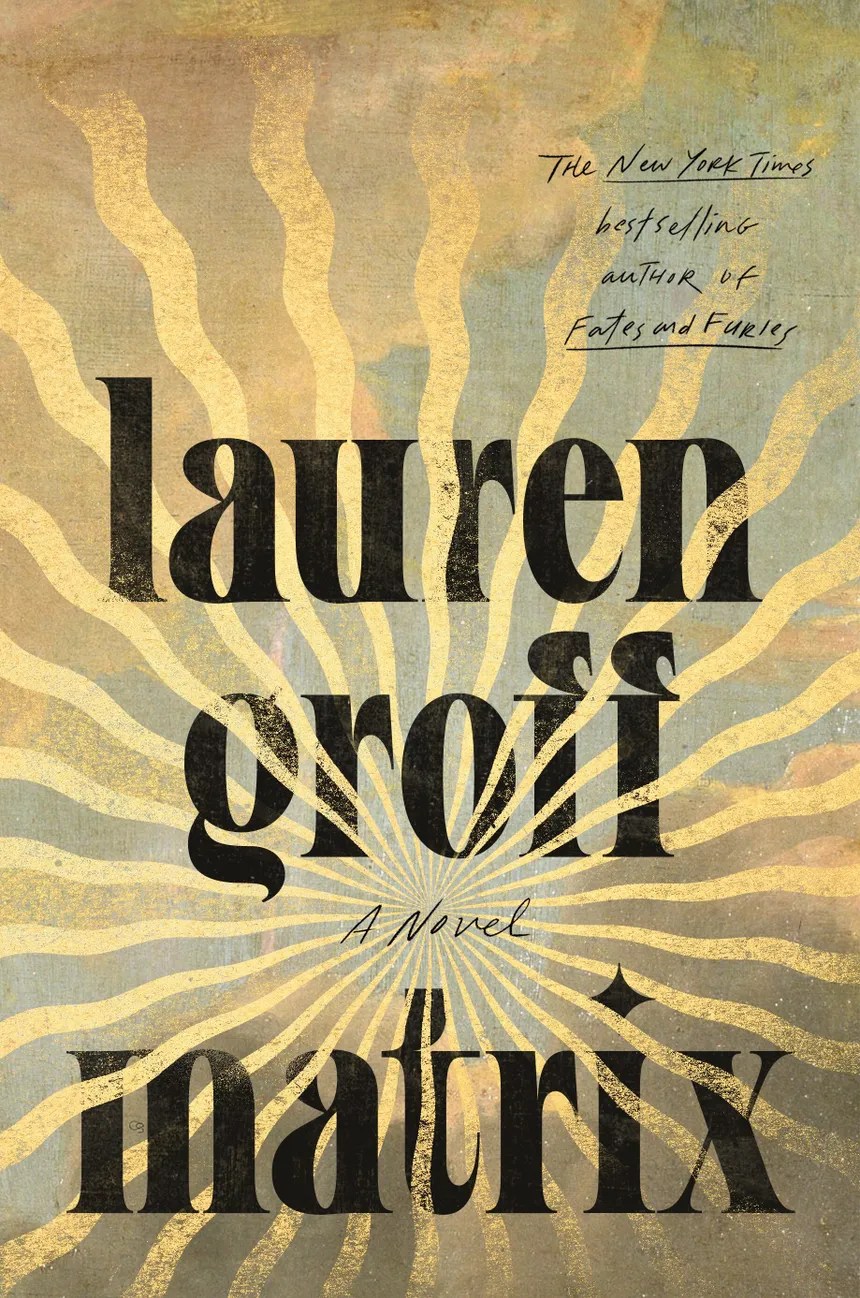
 Another recommendation from my fellow bookclubber, I was looking forward to this book after enjoying Groff’s Fates and Furies last year. While Matrix was good, it wasn’t great.
The novel tells the imagined story of Marie de France (who may have been a few other Maries of the 12th century), a quasi-noblewoman in the court of King Henry II and Queen Eleanor of Aquitaine who is sent to a poor and desolate abbey in Southwest England. Marie is an extraordinarily tall and unattractive woman, with a strong and unrequited love for Eleanor and no true vocation as a nun. However, she immerses herself in the abbey’s life, rising quickly to the role of abbess from where she transforms the abbey to a wealthy and powerful sanctuary for women. She attributes the inspiration for her innovations and expansions of the abbey to visions from holy women and exerts her power to improve and further sequester the lives of the nuns in an idyll separated from the rest of the world. At the end of her life, it is clear her impact will be felt for a long time, even as her accomplishments start to wither and recede almost immediately.
The title “matrix” is derived from the latin “mater” or mother, and appears in a few contexts in the novel – as a device, like a stamp or seal, for approving documents; the imprint made from such a device; the suffix for titles within the abbey (e.g., the infirmary supervisor is the infirmatrix).
While the story of this woman’s life was fascinating, I found some of the sections a bit long-winded, and more importantly I didn’t like Marie. While her background is indeed difficult, I didn’t experience much sympathy for her. Her rationalizations of some of her more selfish or power-hungry actions, deceiving her fellow abbey leaders, and taking on the roles of priest and confessor – all of these made her seem to me more of a cult leader than a protector of women. This was especially seen in her banishment of a young rival and her almost glee at the girl’s sad fate; this reminded me of older women in business deliberately putting barriers in place for younger women with the justification that “no one made it easy for me” when really the reason is “I don’t want the competition.” Marie also minimizes or glosses over the real impacts of her expansions of the abbey, especially to the natural environment; extinctions of species and displacement of people are dismissed as necessary sacrifices for the safety of her nuns (but more correctly for the vanity of her projects). She discovers early how to exploit her position and build power over others, without presenting any unselfish principles: “For it is a deep and human truth that most souls upon the earth are not at ease unless they find themselves safe in the hands of a force far greater than themselves.” She is intent on being that greater force without the true intention of bringing ease to others beyond herself and her sisters.
She also learns and recognizes a power/weakness dimension for women: “Women in this world are vulnerable; only reputation can keep them from being crushed.” She uses this as a rationale for some of her more brutal and cruel actions against others, preserving the reputation of her strength and savvy as essential for her power, in itself essential to preserve the lives of the sisters.
I also found some of the stereotypes of nuns – lesbian, unattractive, bitter – overdone. The ones identified as physically attractive either leave or are pushed out of the place, and the overt lesbian relationships and sex throughout seemed to me like a reinforcement of that cliché. In the same way that men sequestered in prisons for years find physical pleasure/release where they can while remaining heterosexual, the proximity of women in abbey may lead to lesbian sex but that doesn’t mean that all those interactions reflect true relationships.
For a story about people with a religious vocation, there is less about religion and the church than about their construction projects, lesbian interactions, and female in-fighting. And for a story based on a historical figure about which little is known other than her writing and poetry, there is hardly anything here to suggest her writing life. This latter was perhaps most disappointing, as I would have like to see more about this side of Marie. It might have made her more interesting and empathetic.
Lastly, while the damage to the environment around the abbey from the various constructions is undeniable, near the end of the novel there are several suggestions about the impending warming of the earth. This seemed to me some obvious social commentary of modern times that was out of place in this middle-age story, and a bit of shameless editorializing on contemporary issues.
I did enjoy the historical contexts, with the conflicts between crown and church, the character of Eleanor, and the looming Crusades providing tantalizing but not fully explored side stories. And despite what I found to be long-windedness, I did enjoy the writing. Ultimately, I didn’t like this as much as Fates and Furies but will still read other Groff work as she does pick interesting subjects and is not afraid to delve deep into them.
Fate: little book library.
8 – female author
11 – referral
19 – based on true
20 – one word title
31 – history/politics
 rclr
rclr 
Leave a comment