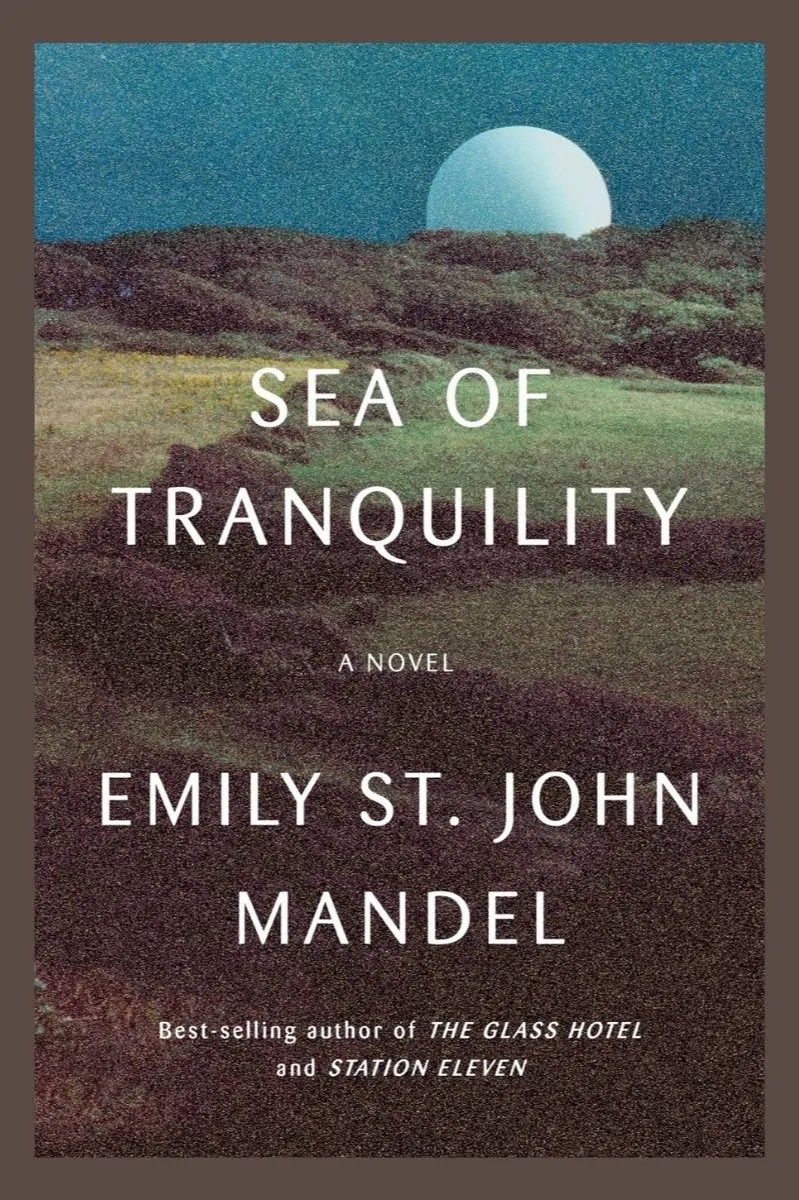
 This is my second Mandel book for 2024, chosen based on how much I enjoyed Station Eleven. I actually liked this one even more.
Written during the COVID-19 pandemic, the story is about a world of the future where time travel is possible (and also illegal). Over the centuries, there are many pandemics – COVID-19 is little more than a footnote compared to the several more that ravage humankind. In one of the colonies on the moon, a young man joins the Time Institute, ostensibly a physics research institute but really the keepers of the time machine, where they are exploring the simulation hypothesis: due to a long documented “glitch” in the timeline, could we be living in a simulation – a universe that is just a program running for some other entity – rather than a true reality? What follows is a somewhat mind-bending trip through various times to investigate this anomaly.
Everything about this story is well done – the pacing, writing, characters, twists, and ending are superb. The investigation raises interesting questions about the notion of reality: if we were living in a simulation, how would you prove it? If we’re not, how do you explain the time glitches we’re already familiar with, like déjà vu or gaps in memory? And even if it is a simulation, why should that matter to our experience of life?
There are also more contemporary questions that the story touches on. In a moment of meta-ness, one of the characters is an author who writes post-apocalyptic stories; when asked why she chooses that genre, she suggests perhaps there is a hope within a catastrophe that the civilization that emerges on the other side will somehow be better, a sort of cosmic do-over, with an element of evolutionary theory (what doesn’t kill us makes us stronger). She is more inclined to think it’s a reflection of our overall tendency as humans to be uncomfortable with comfort and safety; when times are good, we become even more anxious about pending catastrophes, no matter how remote their possibility. This reminded me of trying to define the difference between an optimist and a pessimist – the optimist sees a run of good luck as something to celebrate, while a pessimist sees only the inevitable end of that run.
I was delighted by this book, and especially enjoyed the surprising, and surprisingly happy and realistic (which is odd for a time travel story) ending. Mandel has only one other book that’s not yet read, but now I feel compelled to read it to see if she can make a trifecta of excellence.
Fate: passing along to another reader
1 – a book with a murder
8 – a female author
13 – set somewhere I’ve never been
17 – place name in the title
33 – Canadian author
 rclr
rclr 
Leave a comment