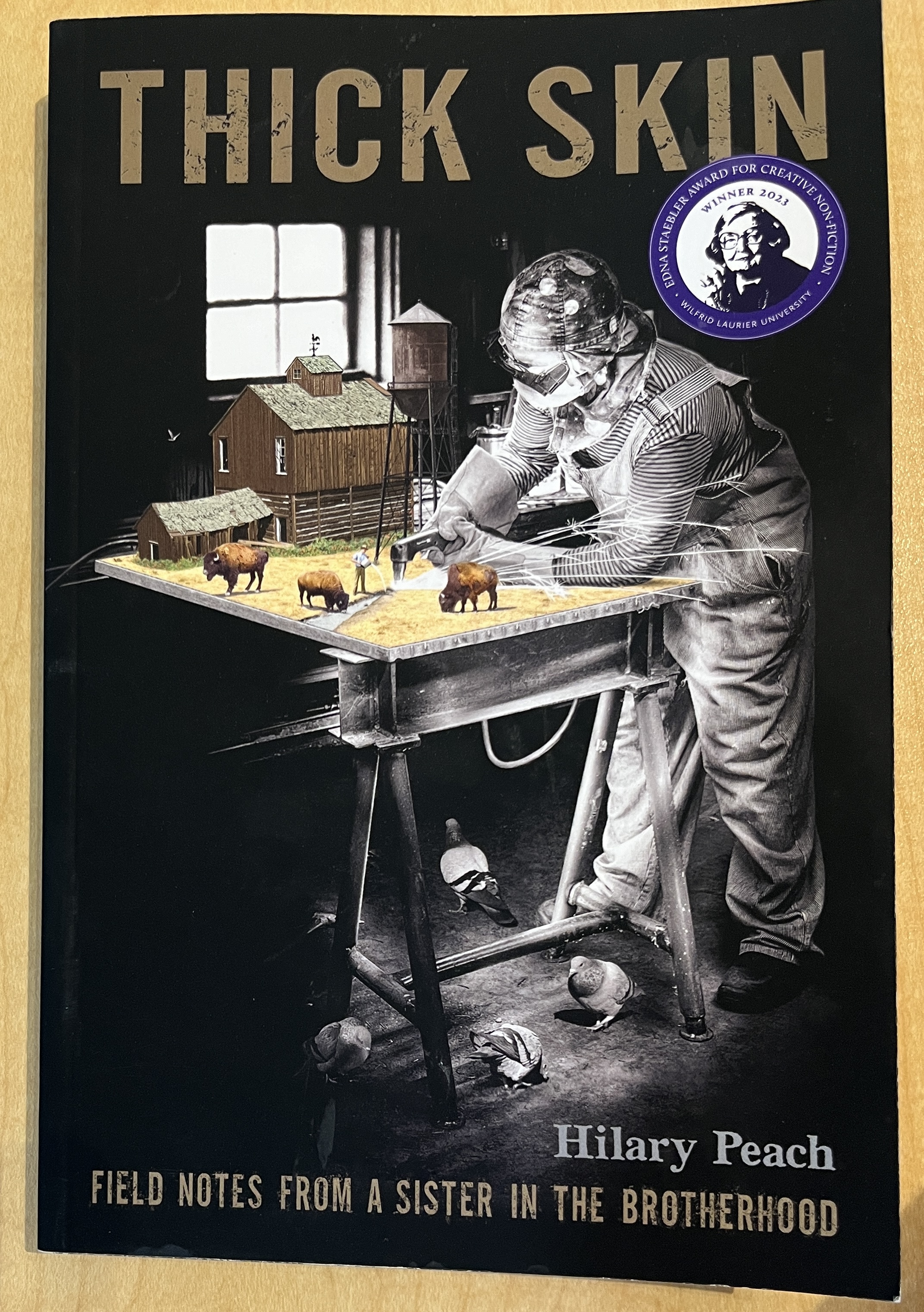
 Hilary Peach is a poet, author, and boilermaker. This book is a memoir, her recollections of her decade in the field and on the road in a difficult, dangerous, demanding, and essential trade. She is part of a different 1% – the women in the boilermaker’s union. While the discrimination and misogyny of the industry is discussed, Peach focuses more on the rough and dirty (and often unsafe) working conditions, the loneliness and disconnection of transient work, and the resource and manufacturing industries that depend on the trades to make them work.
Peach describes her two decades in the trade, much of that spent as a “travel card”, a transient worker at locations across North America. While there is high demand for the boilermaker craft (ditto for welding and any of the infrastructure trades), the work is rarely all in one place. Big sites like refineries and steel plants are typically built to last, and so construction, repair, and maintenance work happen only intermittently, and the local workforce needs to be augmented for these larger jobs. To stay busy and viable, the tradesperson, especially one new to the business, needs to be mobile, tough, and resilient.
“…boilermaking teaches endurance, forthrightness, patience, and strength, as well as survival skills that many women are specifically discouraged from learning: how to let things roll of your back. How to gain confidence and skills you can be proud of as you take on more and more complex work. How to make excellent money.”
While she doesn’t make light of the sex discrimination in the industry, she is careful to put it in the context of many dimensions of discrimination. Being an outsider on almost every job means that there is always something about you that is different and therefore vulnerable to teasing, abuse, and marginalization. On one job in Ontario, Peach experienced discrimination based on language and place of origin – the bulk of the crew were francophone and from New Brunswick (spoiler, she eventually makes friends with the group). In several early jobs, the discrimination was based on her being a novice; the work is difficult, dangerous, and done in pairs, so people were naturally nervous about working in a confined space with a newbie. She does detail some horrible sexism, and abuse and danger well beyond harassment, but as above, in the context of a long career, these are not the predominant experience. She also acknowledges near the end that much has changed and is changing with the newer generations of skilled tradespeople.
Alongside the difficulties in learning and becoming expert in the craft, Peach describes the strange combination of isolation and camaraderie that the traveling boilermaker experiences. Stuck in a new, small town in a crummy motel with bad food, working long night shifts with strange new colleagues, the experiences are both daunting and delightful. When she finds herself on a job in Nova Scotia, she finds accommodation at a lovely farmhouse B&B. On the first day of the job, she’s working again with the francophones, this time as pals. She makes many real friends, and experiences fewer “monsters”. She also learns to give as good as she gets, becoming as capable of swearing a blue streak and executing a crude joke along with the rest of them.
Ultimately, the job takes its toll on her physically, but she’s able to pivot into a quality and training role, making the most of her experience and expertise. She is clearly embedded in the craft, and is a fierce advocate for the trades more generally as a place for anyone who can endure the physical and other difficulties of this fiery field.
I do wish there had been just a little bit more about what welding and boilermaking actually is. There are bits of technical jargon throughout about the materials, tools, and methods of the trade, but little in the way of explaining those to the non-welder. However, the book and stories are just fine without that (I can always read about the technical details elsewhere).
Fate: This book was a selection by my other book club club member, so I’ll be hanging on to it long enough to review it with them. Then it will make its way to another reader, likely through the little book library.
2 – title with a body part
8 – female author
23 – a memoir
25 – new author to me
33 – Canadian
34 – prize winner
 rclr
rclr 