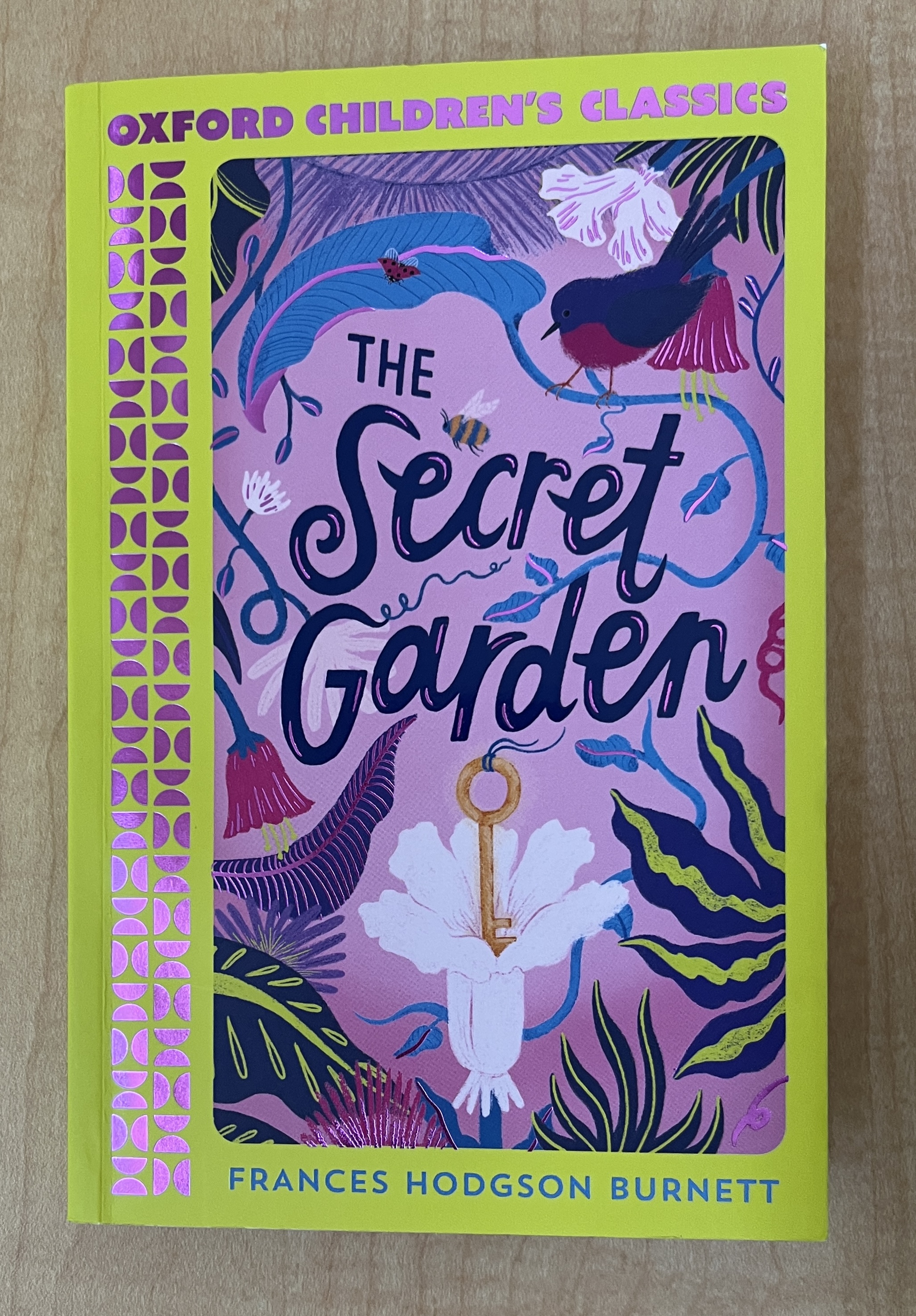
 This is one of those “I can’t believe I’ve never read it” books, one that it seems everyone has read except me. I was moved to read this after a conversation about books with a coaching client, who said that this was their favourite book ever. I decided to give it a try ahead of our next meeting.
In The Secret Garden, we are introduced to Mary Lennox, the spoiled but ignored daughter of English ex-pats in colonial India. Her early life of indolence, comfort, and parental neglect comes to a harsh end with the death of her parents and nearly everyone familiar to her. She is shipped (almost like a difficult parcel) to England to her only living relative, an uncle who, despite being of considerable means, is even more neglectful than her own parents. Mary eventually finds her way to the secret garden, and her time spent outdoors, as well as her connections and friendships with others, bring considerable improvement to her character and everyone’s life, especially Colin, her even more neglected and more spoiled cousin. Everyone is changed for the better, and they all live happily ever after (presumably).
My favourite passage comes near the end of the book, in a brief intrusion by the author to sum up some of the lessons from the story. She says:
“At first people refuse to believe that a strange new thing can be done, then they begin to hope that it can be done, then they see it can be done – then it is done and all the world wonders why it was not done centuries ago.”
The Oxford Children’s Classics edition that I read includes excellent afterword sections, including this about seeing the story in the context of the times in which it was written:
“Not all ideas and values in classics will be the ideas of today, but by understanding the world in which they were written, we can enjoy these stories for many years to come – and maybe even question and ponder some of the changes we take for granted in our own time.”
Take that sensitivity readers and editors!
The Christian Science influences are clear, but not overt or in any way proselytizing. The power of positive thinking and the connection to nature as a powers for good in physical and mental health and for morality can be seen throughout, as well as the important influence of dreams as messages. There are even hints of biblical and Christian influences; the boy Dickon’s strong connections with animals seems very St. Francis, and the mother from the cottage, in her blue cloak and with her calm and wise ways, has hints of Mary (Jesus’s mother, not any of the other ones).
Fate: I’m not going to read this again, so after discussing it with my colleague, it will go to a little book library. But, it does inspire me to revisit a few other childhood books, so more of those to come.
3 – published before 1939
8 – a female author
9 – been made into a flim
25 – a new author to me
 rclr
rclr 