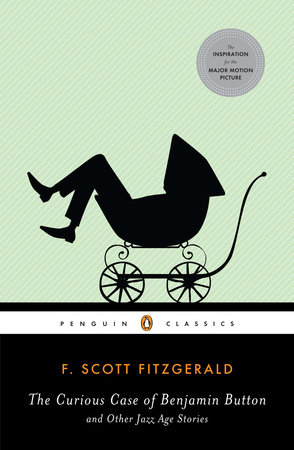
 Last year, I listened to an episode of Backlisted (a favourite podcast) about American fiction, where one of the panelists recommended the story, “The Diamond as Big as The Ritz”. I was interested enough that I sought out a collection of 19 Fitzgerald stories that included this story, and was surprised to find that he’d written so many short stories in the early 1920s, prior to his more famous novels.
This book is a compilation of two books of short stories – “Flappers and Philosophers” and “Tales of the Jazz Age”. While the stories are uneven in quality, none are terrible, and several are terrific. The themes of the stories range from the lost potential of youth to various response options in the face of social pressures. They are mostly set in the more affluent parts of society, with debutantes and large houses and archaic social mores. All characters are white and upper-middle class, with several fairly strong and well-structured female characters and stories. For example, in “The Offshore Pirate”, an independently-minded young woman is taken hostage by a polite pirate hijacking the boat she is on, taking her on an adventure that turns out to be a romantic ruse.
That idea of lost potential or opportunity is present in almost all the stories. Even though Fitzgerald was only in his mid-20s himself when writing these (all stories came out between 1918-1923), his almost-despair at the follies of youth suggest an author of considerable experience and weariness. From “Bernice Bobs Her Hair”, a wonderful story of adolescent girls and the social pressures to conform: “…Marjorie considered whether or not convincing her mother was worth the trouble. People over forty can seldom be permanently be convinced of anything. At eighteen our convictions are hills from which we look; at forty-five they are caves in which we hide”
As Fitzgerald himself died at 44, that last bit is perhaps prescient, as he seemed to live as if trying to avoid that fate.
Other excellent stories are “The Cut-Glass Bowl”, “The Four Fists”, “Dalyrimple Goes Wrong”, and the aforementioned Diamond story. This latter includes a remarkable plot twist that had me gasp out loud, confirming the recommendation as a story worth seeking out. I won’t spoil it, other than to say I concur with the recommendation.
Another terrific quote, this from the Diamond story: “It is youth’s felicity as well as its insufficiency that it can never live in the present, but must always be measuring up the day against its own radiantly imagined future…” Again, astonishing given his own young age, but also given the age in which he lived, when motorcars and telephones were modern miracles, when the devastation of WWI was still memorable and the further devastations of the Great Depression and WWII were as yet unknown. This line also reflects our current times, when people (young and old) spend so much time and energy on social media trying to live up to social expectations, ignoring their present potential for an imagined future based on comparisons and likes.
I found the most famous story, the titular Benjamin Button, to be one of the lesser tales here. While not terrible, it was not as arresting and engaging as some of the others, perhaps because I already knew the story’s main conceit and was imaging Brad Pitt as the lead (which just didn’t seem to work).
I highly recommend Scott’s stories as excellent reads and clear reflections of the glamour of the Jazz Age.
Fate: I may read some of these again in the future, so on to my own shelf it goes.
3 – before 1939
9 – made into a film (the title story, anyway)
14 – a name in the title
18 – short stories
 rclr
rclr 