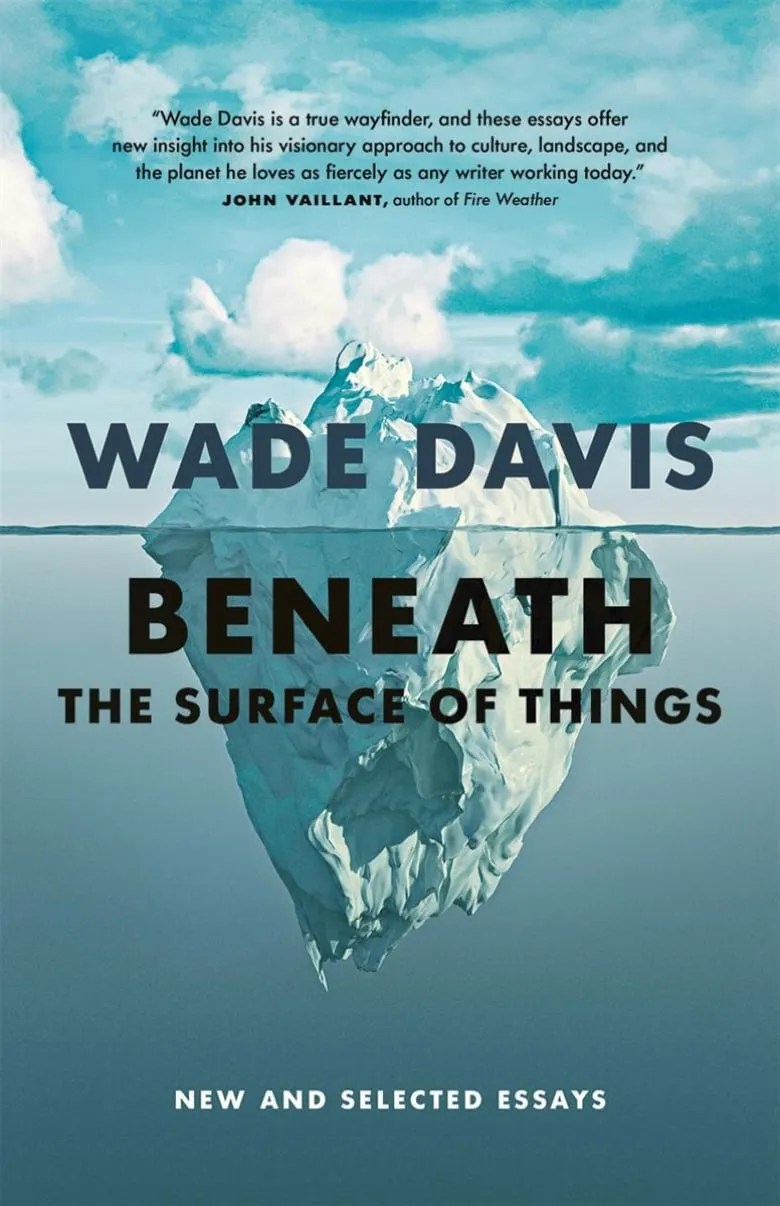
 This was an impulse purchase at the local bookshop. By rights, I should have waited for a birthday or Christmas list (and for paperback), but impulses rarely give way to such sober second thinking. I was keen to read more of Wade Davis’ writing after enjoying The Wayfinders last year, as well as his public lecture last fall. So, this seemed more than apropos.
Unlike the previous read, this collection of 13 essays reflects a grab-bag of topics from modern times rather than an over-arching theme, with most of the these coming from previously published work. Davis dives into modern US and Middle Eastern politics, climate change, and Indigenous relations, with detours into histories from Asia, Canada, and South America. Along the way, the reader learns a great deal about all the topics, with clear, earnest, and rational but not over-bearing opinions and perspectives from the author.
There is much to learn and reflect on here. The powerful and timely, “The Promised Land” contemplates the histories and realities of Israel. Clearly written before 07 October 2023, the essay presents much of the difficult background and current state of the region, presenting no clear answers but lots of questions. In “Of War and Remembrance”, Davis delves into the background of Remembrance Day – how it came to be, what it represents, and the tragedy of our forgetting all of that. Similarly, in “The Crowning of Everest”, he takes the reader back to early days of adventure and exploration (albeit of lands and spaces already discovered by the people living there) and reflects on the inspiration to be taken from those characters and challenges. The excellent and lengthy “Beyond Climate Fear and Trepidation” is a sober assessment of the climate “movement” and all the good and ill that it has wrought and continues to wreak; Davis both challenges and endorses various scientific and social elements of the issue, and like with the Israel essay, comes down on the side of the rational, acknowledging that there are no clear or easy answers, just very clear and urgent questions that get lost in the current rhetoric, violence, and polarization.
My favourite essay was more personally relevant for me. In “The Divine Leaf of Immortality”, Davis takes a deep dive into the history and physiological effects of the coca leaf, as well as the politics and failed policies around the “war on drugs”. By any measure, this war has been a failure of epic proportions, a folly all round. Billions of dollars spent, lives ruined by punitive approaches that do little to address the source of the problem, and current drug use and damage at epidemic proportions – all signs of the failure. But Davis’ focus is on the true lost opportunity. With the demonization of coca as being equivalent to its destructive cousin cocaine (and all of its progeny), the world has lost the opportunity and promise of, “…one of the most beneficial plants known to botanical science.” As presented here, coca is indeed a divine leaf.
The personal connection is to my pop. His PhD research was on a specific alkaloid from the coca plant. If I understand his thesis (which is doubtful, but I gave it a try), the physiological effects of the chewing of coca leaves are not linked to the presence or creation of cocaine but to the byproducts created through the mastication. In other words, as Davis presents, the leaf is neither benign nor malignant, but remains mysterious in its ways.
I didn’t enjoy all the essays here (the one on India was quite a slog), but the ones I did enjoy I found erudite and enlightening.
Fate: not sure if I’ll keep my copy, but I am sure it will be purchased as gifts for others this year.
4 – published in 2024
10 – a book of essays
26 – science non-fiction
31 – history/politics
33 – Canadian
 rclr
rclr 