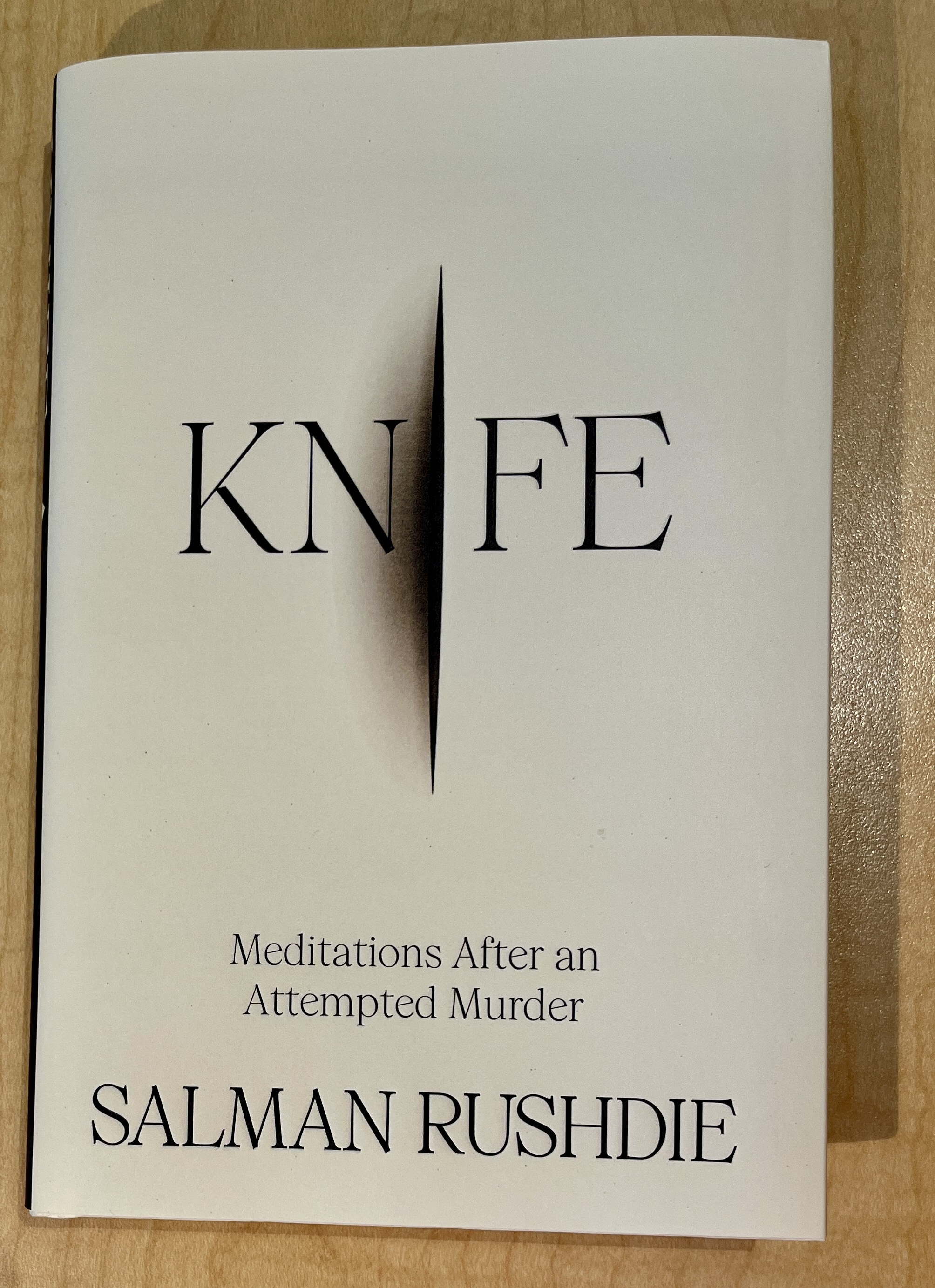
 I have only ever read one Salman Rushdie before – East, West, published in 1994. I don’t recall much about it, other than where and when I bought it – in 1994, in London. My copy is autographed by the author, something I thought extraordinary since he was still very much in hiding at that time.
30 years on, less than 2 years after someone tried to make good on the edict of the fatwā, Rushdie has published this striking memoir, his meditations after an attempted murder in 2022. In addition to the graphic and up-close descriptions of the attack itself and the physical and emotional aftermath of that day, Rushdie explores themes of love, freedom, time, history, art and writing, family, and justice, confronting himself and the reader with the inherent contradictions of all of these. He does not purport to answer big questions (although he gives some of his own answers and perspectives) but as he walks through his own experiences and path to recovery, he opens these questions for consideration by the reader: are there limits to freedom of expression? What is the purpose and role of religion – for individuals and society? How does one confront and reconcile such personal violence?
One especially interesting point is that about art: how much understanding can one gain about a person by studying their art? Rushdie asks this primarily about himself, and answers that his own published fiction doesn’t reveal or reflect who he is as a person. As an artist, he crafts and tells stories, but they don’t reflect his entire or true world view, and this is the error of the fatwā, that what he wrote about reflects his beliefs (that and the notion that there are subjects that are off-limits in writing). His fiction – indeed, any writer’s fiction – offers no judgement or declaration about religion, politics, or the lives of others.
I was captivated and deeply moved by this book. It felt very real and raw, likely because it is so close in time to the actual event. In current times of violent division, loud misunderstanding, and lack of faith and trust – in one another, in higher powers – this book feels very timely, a meditation on how these larger cultural concepts and societal elements become very real on a personal level. Not a cautionary tale, but an account of one person’s experience writ large for us all to consider and reflect.
In the past few years, I have attempted to read Rushdie’s more famous novels, but found them less engaging – perhaps the magical realism of those worlds is not my thing. I might try again in audiobook form*, and I may also seek out Rushdie’s other non-fiction works, as his writing is excellent and his thoughts provocative and stimulating.
Fate: I’ll hang on to this one for a while.
4 – published in 2024
20 – one-word title
23 – memoir
*Afterword, August 2024. In the past few months, I did listen to The Satanic Verses in audiobook. It was wonderful – a modern fairy tale about love, family, celebrity, and good vs evil. The moments of absurdity reminded me of the early John Irving novels I love. Ultimately, the characters are all flawed and challenging to like, but the stories are creative and engaging. The alleged blasphemy is much ado about nothing.
 rclr
rclr 
there is good vs evil it every turn rushdie. Was right about burting people many bit what Jaye never who know want to around ans family remember how love is all about.